
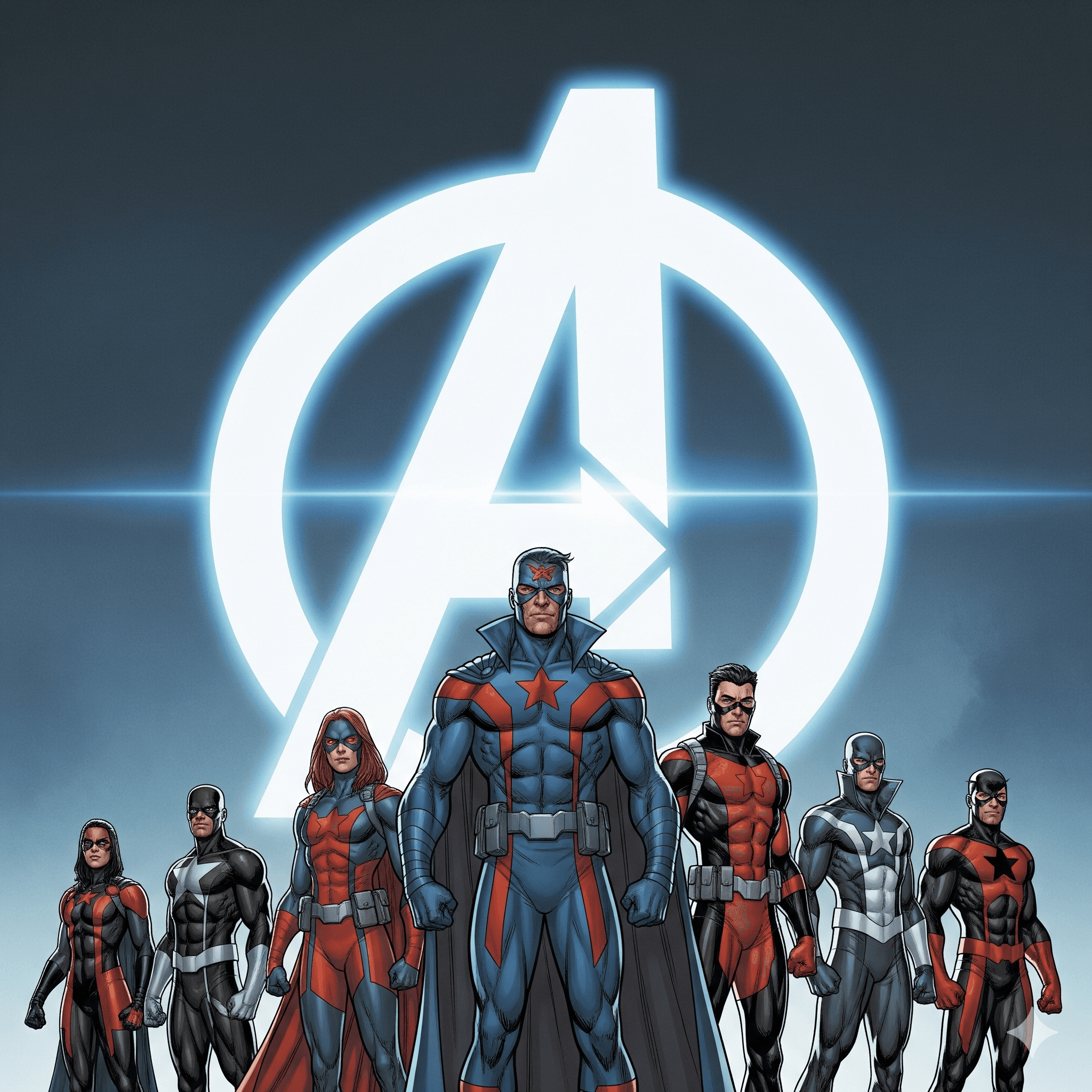
Marvel’s Missed Opportunity: Why Thunderbolts Should Have Been Positioned as “The New Avengers”
The Strategic Misstep
Marvel Studios has built an entertainment empire on the foundation of the Avengers brand, transforming a relatively obscure comic team into a globally recognized cultural phenomenon worth billions. Yet as the company transitions into its post-Infinity Saga era, a critical positioning error may be undermining the success of one of their most promising new properties: Thunderbolts.
Rather than positioning Thunderbolts as the natural succession to the Avengers legacy, Marvel has treated it as a standalone anti-hero ensemble, missing a golden opportunity to leverage their most valuable brand equity while creating a compelling narrative of redemption and evolution.
The Avengers Brand: Marvel’s Crown Jewel
The Avengers represent more than just a superhero team—they embody Marvel’s core brand promise of “heroes coming together when the world needs them most.” This positioning has generated over $7 billion in box office revenue and countless billions more in merchandise, streaming, and licensing deals. The brand carries emotional weight that extends far beyond comic book fans, representing themes of unity, sacrifice, and hope that resonate with global audiences.
However, with the original Avengers roster largely retired or departed, Marvel faces a succession challenge that goes beyond storytelling—it’s a brand management crisis. How do you maintain the emotional and commercial power of the Avengers when the characters that defined it are no longer available?
Thunderbolts: The Anti-Heroes Marvel Needed
The Thunderbolts concept—villains seeking redemption by becoming heroes—offers a sophisticated evolution of the traditional superhero narrative. In an era where audiences crave moral complexity and character development, the team represents everything modern storytelling should be: nuanced, character-driven, and emotionally rich.
From a marketing perspective, the Thunderbolts roster includes characters audiences already know and are invested in: Bucky Barnes (Sebastian Stan), Yelena Belova (Florence Pugh), John Walker (Wyatt Russell), and others who have been carefully developed across multiple films and series. These aren’t unknown quantities requiring expensive introduction campaigns—they’re established characters with built-in fan bases and emotional investment.
The Positioning Failure
Marvel’s marketing approach has positioned Thunderbolts as “the anti-hero team” or “the dark Avengers alternative,” fundamentally misunderstanding their own brand architecture. This positioning creates several problems:
Brand Fragmentation: By avoiding the Avengers connection, Marvel is essentially starting from scratch with audience expectations and emotional investment, requiring significantly more marketing spend to establish the property.
Missed Emotional Resonance: The Thunderbolts story is ultimately about redemption—former villains proving they can be heroes. This narrative becomes exponentially more powerful when positioned as “earning the right to be called Avengers,” rather than simply forming another team.
Commercial Limitation: The Avengers brand commands premium pricing across all revenue streams. Merchandise, licensing deals, and box office premiums all suffer when divorcing the property from this established equity.
What Marvel Should Have Done: “Thunderbolts: The New Avengers”
The optimal positioning strategy would have framed Thunderbolts as the next chapter in the Avengers legacy. Here’s how this could have been executed:
Narrative Integration
Position the team as reluctant inheritors of the Avengers mantle, struggling to prove they deserve the title. The central tension becomes not just “can villains become heroes?” but “can these heroes become Avengers?” This creates immediate stakes and emotional investment.
Marketing Messaging
- Tagline: “Not the Avengers you expected. The Avengers the world needs.”
- Campaign Focus: Frame each character’s journey as earning their place in Avengers history
- Visual Identity: Incorporate Avengers iconography while maintaining distinct team identity
Brand Architecture
Create a clear succession narrative:
- Phase 1: Reluctant team formation under shadow of Avengers legacy
- Phase 2: Proving themselves worthy of the name through sacrifice and growth
- Phase 3: Full acceptance as legitimate Avengers successors
The Commercial Impact of Better Positioning
Proper positioning could have dramatically improved the property’s commercial prospects:
Box Office Premium: Avengers-associated films command 20-30% higher opening weekend premiums compared to standalone Marvel properties. Even with the “Thunderbolts” subtitle, Avengers association would have driven significantly higher initial interest.
Merchandise Optimization: Avengers-branded merchandise consistently outperforms other Marvel properties by 2-3x in retail environments. The redemption angle would have created compelling character arc merchandise opportunities.
Streaming Value: Disney+ engagement with Avengers-connected content shows 40% higher completion rates and 25% better retention metrics than standalone properties.
International Markets: The Avengers brand has stronger recognition in international markets, particularly in Asia, where the moral complexity of redemption narratives resonates strongly with local storytelling traditions.
The Path Forward: Course Correction Opportunities
While the initial positioning misstep has occurred, Marvel still has opportunities to realign the property:
Retroactive Brand Integration
Future marketing can begin incorporating Avengers legacy themes, positioning the team’s evolution toward earning the Avengers name as a multi-film arc.
Character Development Focus
Emphasize individual character journeys toward heroism as steps toward Avengers worthiness, creating emotional investment in their growth.
Strategic Cameos and References
Incorporate surviving Avengers members (Sam Wilson, Bruce Banner) to explicitly bless the team’s evolution and create brand continuity.
Merchandise Strategy Shift
Develop products that highlight the “becoming Avengers” narrative, creating collectible value around character transformation arcs.
Lessons for Marvel’s Brand Management
The Thunderbolts positioning reveals broader challenges in Marvel’s brand strategy:
- Legacy Brand Management: How to maintain iconic brand equity while evolving character rosters
- Audience Transition: Moving established audiences from familiar properties to new ones
- Narrative Continuity: Balancing creative innovation with commercial brand consistency
Conclusion: The Cost of Caution
Marvel’s conservative approach to Thunderbolts positioning represents a rare strategic misstep from a company that has otherwise demonstrated masterful brand management. By failing to connect the property to their most valuable brand asset, they’ve created unnecessary barriers to commercial success while diminishing the emotional impact of what should be a powerful redemption narrative.
The irony is that the Thunderbolts concept—villains becoming heroes—perfectly mirrors the brand challenge Marvel faces: taking something perceived as “lesser” and elevating it to iconic status. They had the blueprint for success in their own narrative structure but failed to apply it to their marketing strategy.
In an entertainment landscape where brand equity is everything, Marvel’s reluctance to fully embrace the succession narrative may prove to be not just a creative missed opportunity, but a costly commercial mistake that reverberates across their entire post-Avengers strategy.
The Thunderbolts deserved better positioning. More importantly, audiences deserved a clearer path to emotional investment in Marvel’s next chapter. In missing this opportunity, Marvel hasn’t just underserved a single property—they’ve potentially weakened the very brand foundation that made their success possible.
Related Insights

How Google I/O 2026 Reshuffled the Search Algorithm—And How ContentXIR Empowers Brands to Dominate the Agentic Web
Google just restructured its search core around Gemini 3.5 Flash, 24/7 background Search Agents, and dynamic Generative UI. Learn how ContentXIR’s causal engine delivers the diagnostic insights needed to survive this new age of SEO.

The Neural Search Shift Season 04: GEO Protocols (The Finale) Episode 07: A/B Testing for Algorithms
We have spent this season re-engineering your content, your code, and your PR for the Generative AI era. But how do you actually know if it is working? In the…

The Neural Search Shift Season 04: GEO Protocols (The New Playbook) Episode 06: The Itinerary Engine
For brick-and-mortar businesses, event spaces, and localized services, the game has fundamentally changed. The “Map Pack” is no longer the final destination. Users are no longer asking search engines to…