
The AI Marketing Transformation (Part 3): Solving the “Generic Content” Problem
You have identified your customer (Part 1). You have found a trending topic (Part 2). You write the article, publish it, and wait.
Silence. High bounce rates. Zero conversions.
Why? You were writing about the right thing, but you were writing it in the wrong language. Not English vs. French, but Psychology vs. Fluff.
This brings us to the third bottleneck: The “Tone-Deaf” Trap.
The Business Problem: One Size Fits None
Most content marketing suffers from “Generic Voice Syndrome.” Brands adopt a safe, bland corporate tone that sounds like everyone else.
They fail to distinguish between:
- The Anxious Buyer who needs “Authority” and reassurance.
- The Impulse Buyer who needs “Urgency” and excitement.
- The Researcher who needs deep, “Informational” data.
If you speak to an expert researcher like a beginner, you lose them. If you speak to an impulse buyer like a textbook, you lose them. Getting the topic right is only 50% of the battle; getting the psychological framing right is the other 50%.
The Approach: Psychographic Mirroring
To fix this, we need to stop guessing what tone works and start analyzing what our audience actually consumes.
If your target customer loves reading The Wall Street Journal, don’t write to them like you are BuzzFeed. We need to “mirror” the psychographics of the content they already trust. We need to reverse-engineer their mindset.
The Solution: Content Affinity Persona Generator
This is why I built the Content Affinity Persona Generator. It is an empathy engine for your content strategy.
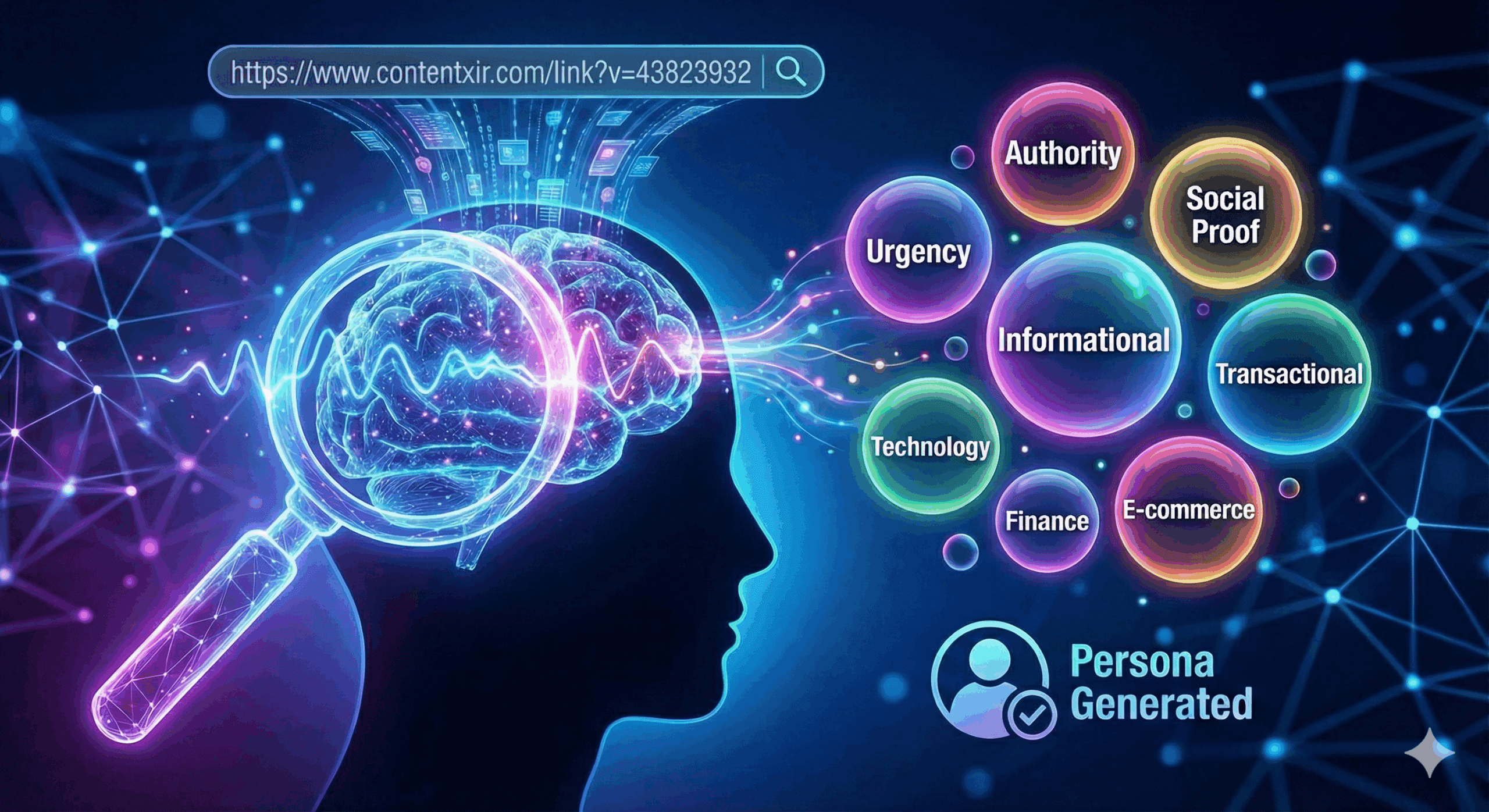
Instead of asking you to fill out a form about your audience, it asks you to show it what they read. You input a URL of a successful piece of content, and the AI deconstructs why it worked.
Here is how it fixes Generic Content:
1. It Decodes User Intent
Most marketers confuse “browsing” with “buying.” The AI analyzes the content to tag the specific User Intent.
- Is it Informational? (They want to learn).
- Is it Transactional? (They are ready to buy).
- Is it Commercial? (They are comparing options).
Knowing this tag changes everything. If the intent is “Informational,” you write a guide. If it’s “Transactional,” you write a sales pitch.
2. It Identifies Emotional Triggers
This is the secret sauce. The AI detects the psychological hooks used in the content. Does the audience respond to “Authority” (expert opinions)? Do they need “Social Proof” (reviews)? Or are they driven by “Urgency” and “Scarcity”?.
If the tool tells you your audience responds to “Authority,” you know to pack your next article with statistics and expert quotes.
3. It Maps the Customer Lifecycle
The tool identifies if the content targets the Awareness, Consideration, or Decision stage. You stop sending “Decision” level content (like pricing pages) to users who are still in the “Awareness” phase (just looking for tips).
The Result
With the Content Affinity Persona Generator, you stop writing into the void. You start crafting content that feels like it was written specifically for the person reading it. You match their intent, their emotion, and their stage in the journey perfectly.
Next Up: We have the strategy, the trend, and the persona. Now, we need to build the actual product interface. In Part 4, I will tackle the friction of the Design-to-Development Handoff.
Ready to decode your audience’s psychology? Try the Content Affinity Persona Generator at https://www.contentxir.com/products/content-affinity-persona-generator
Related Insights

How Google I/O 2026 Reshuffled the Search Algorithm—And How ContentXIR Empowers Brands to Dominate the Agentic Web
Google just restructured its search core around Gemini 3.5 Flash, 24/7 background Search Agents, and dynamic Generative UI. Learn how ContentXIR’s causal engine delivers the diagnostic insights needed to survive this new age of SEO.

The Neural Search Shift Season 04: GEO Protocols (The Finale) Episode 07: A/B Testing for Algorithms
We have spent this season re-engineering your content, your code, and your PR for the Generative AI era. But how do you actually know if it is working? In the…

The Neural Search Shift Season 04: GEO Protocols (The New Playbook) Episode 06: The Itinerary Engine
For brick-and-mortar businesses, event spaces, and localized services, the game has fundamentally changed. The “Map Pack” is no longer the final destination. Users are no longer asking search engines to…